THE JOURNAL / Polynucleotides Treatment: What It Is, How It Works and What to Expect
Polynucleotides Treatment: What It Is, How It Works and What to Expect
By: Amanda Azzopardi
01/06/26
If you have been looking into polynucleotides recently, you are not alone. Over the past couple of years, this treatment has moved from something only discussed in specialist circles to one of the most searched topics in UK aesthetics. A lot of the content out there, though, either oversimplifies what polynucleotides do or makes claims … Polynucleotides Treatment: What It Is, How It Works and What to Expect
Book Now
If you have been looking into polynucleotides recently, you are not alone. Over the past couple of years, this treatment has moved from something only discussed in specialist circles to one of the most searched topics in UK aesthetics. A lot of the content out there, though, either oversimplifies what polynucleotides do or makes claims that are not backed by what the treatment can realistically deliver. This guide aims to give you a clear, honest picture — what polynucleotides actually are, how the treatment works, what it can address and what the results genuinely look like.
If you are weighing up whether it is the right treatment for you, understanding it properly is the best place to start.
What Are Polynucleotides?
Polynucleotides are made up of chains of nucleotides — which are, essentially, the building blocks of DNA. When injected into the skin, they work at a cellular level by stimulating fibroblasts, which are the cells responsible for producing collagen and elastin.
Collagen and elastin are what give skin its structure, firmness and elasticity. Both decline naturally with age, and that decline is largely what drives the changes most people notice — loss of density, fine lines, skin that feels less resilient than it used to. Polynucleotides work by encouraging the body to produce more of these proteins rather than adding something artificial from the outside.
This is the key distinction from dermal fillers. Fillers add volume. Polynucleotides stimulate the skin’s own repair processes.
You may also see polynucleotides referred to as PDRN treatment, which stands for polydeoxyribonucleotide. They are sometimes loosely grouped with skin boosters, but they work through a different mechanism to hyaluronic acid-based treatments and are their own distinct category.
How Does Polynucleotides Treatment Work?
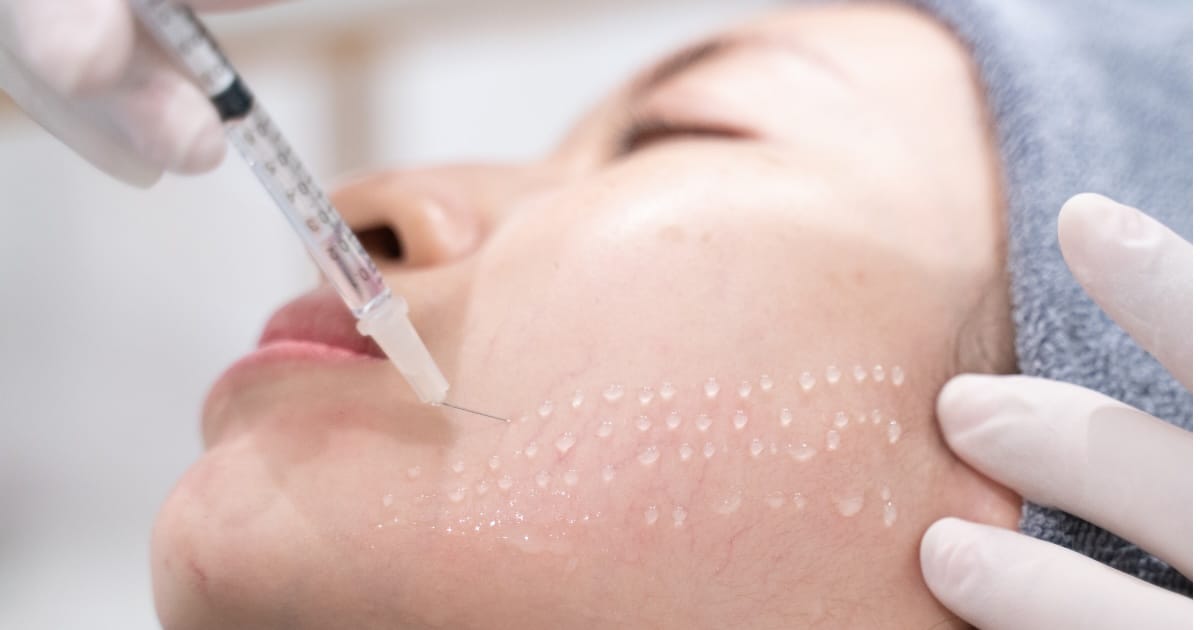
The treatment itself involves a series of small injections into the targeted areas of the skin. Once in the tissue, the polynucleotide molecules are absorbed by the cells, where they stimulate fibroblast activity and support the production of new collagen and elastin.
It is a slow process by design. The skin does not change overnight. What happens over the weeks following treatment is a gradual improvement — the skin starts to produce more of the structural proteins it has lost, hydration improves, and the overall quality and density of the skin begins to shift.
Most people find the results become noticeable several weeks into a course of treatment rather than immediately after the first session. That is not a limitation — it is how regenerative treatment works.
What Skin Concerns Can Polynucleotides Address?
Polynucleotides are used to address a range of skin concerns. They are particularly effective for fine lines, wrinkles, and skin that has lost firmness and elasticity over time. Because they work by stimulating collagen and elastin, the improvements are structural rather than cosmetic.
They are also used for skin hydration and texture, and have clinical applications for concerns such as acne scarring, hyperpigmentation, uneven skin tone and sun-damaged skin.
That said, polynucleotides are not a fix for everything. Whether they are appropriate for a specific concern depends on the individual — the condition of the skin, what is actually causing the issue, and whether a different or combined approach would work better. This is why a proper assessment before treatment matters.
Polynucleotides Under Eyes
The under-eye area is one of the most common reasons people come in asking about polynucleotides. The skin here is very thin, and it tends to show the effects of ageing earlier than most other areas — fine lines, a crepey texture, and the shadowing or darkening that happens as the skin loses its density.
Polynucleotides work in the under-eye area by stimulating collagen and elastin production in the periorbital tissue. Over a course of treatment, patients typically see:
- Improvement in skin texture and quality around the eye area
- Reduction in the appearance of fine lines
- Gradual improvement in the darkness that comes from skin thinning
- A more rested, hydrated appearance overall
One thing worth being clear about: polynucleotides under the eyes are not a filler treatment. They will not correct significant hollowing or add volume the way tear trough filler does. For someone with more pronounced hollowing, a combined approach using both treatments may be more appropriate, and that would be assessed on an individual basis.
What to Expect from Polynucleotides Treatment
Before Treatment
Before polynucleotides treatment begins, a clinical consultation and skin assessment should take place. This is where a practitioner looks at the skin properly, understands what the patient is concerned about, and works out whether polynucleotides are appropriate — and if so, what the treatment plan should look like.
Skin varies considerably from person to person. A thorough assessment is what makes the difference between a treatment that is well-suited to someone and one that is not.
During Treatment
Polynucleotide injections are delivered using a fine needle to the targeted areas. Sessions take around 45 minutes. Most people find the sensations during treatment mild and short-lived.
After Treatment
There is no downtime after polynucleotides treatment. Some mild redness or small marks at the injection sites are normal and usually settle within a day. Most patients go back to their usual routine the same day.
Results
Results build gradually over several weeks as the skin responds. What patients tend to notice is an improvement in texture, hydration and overall skin quality — changes that develop progressively rather than appearing all at once.
Polynucleotides Before and After: What Results Look Like
Polynucleotides before and after results are not the kind of dramatic transformations you might see with some other treatments. The improvement is real, but it is gradual and tends to look like the skin simply being healthier — which is exactly how the treatment is designed to work.
Over a course of treatment, patients commonly report:
- Better skin texture and a smoother surface
- Improved hydration and a more even, healthy-looking complexion
- A reduction in fine lines, particularly in thinner areas of skin
- Improved firmness and elasticity
- More even skin tone and less dullness
The results are subtle in the sense that they do not look done. The skin looks like a better version of itself rather than a treated one. For many people, that is exactly what they are looking for.
How Polynucleotides Fit Into a Broader Skin Plan
Polynucleotides tend to work best when they are part of a wider, considered approach to skin health. Used in isolation as a one-off, the results are more limited. Used as part of a sequenced plan, they can be genuinely effective.
In practice, they are often combined with treatments that work through different mechanisms. Profhilo, for example, is a bio-remodelling treatment that addresses skin laxity and hydration using high-concentration hyaluronic acid — it works differently to polynucleotides but addresses overlapping concerns. LaseMD Ultra is a fractional laser that improves texture, tone and pigmentation at a surface level, which can complement the deeper regenerative work polynucleotides do.
Whether any combination is appropriate depends entirely on the individual. It is not a default recommendation, and the right approach is always worked out through assessment rather than assumed.
Polynucleotides vs Profhilo: Understanding the Difference
Because both are used for skin quality rather than volume, polynucleotides and Profhilo are often compared. They are different treatments that work through different mechanisms.
- Polynucleotides: stimulate fibroblast activity and collagen and elastin production. The mechanism is biological and regenerative — the treatment supports the skin’s own repair processes.
- Profhilo®: delivers high-concentration hyaluronic acid into the tissue, where it spreads and bio-remodels the skin to improve laxity, hydration and overall quality. It works through hydration and structural remodelling rather than direct collagen stimulation.
In clinical practice, they are often used together. The decision about which to use — or whether to combine them — depends on the individual’s skin and what they are trying to address.
Polynucleotides Treatment Cost
At Amanda Azzopardi Aesthetics, polynucleotides treatment is priced from £350. The overall cost will depend on the number of sessions needed and the areas being treated.
Finance options are available for those who prefer to spread the cost, covering treatments from £1,000 up to £8,000. There is 0% interest available, decisions are instant, no paperwork is required, and no deposit is needed.
The full cost breakdown is discussed after the consultation, once the treatment plan has been worked out.
Why a Clinical Assessment Matters
Polynucleotides are not a treatment where one approach fits everyone. The right product, the frequency of sessions, the areas to treat and whether to combine with anything else all depend on the individual.
A proper assessment is what makes the difference. It is where a practitioner actually looks at the skin, understands the concern and works out what is likely to help — rather than applying a standard protocol because someone has asked for a particular treatment.
If you are considering polynucleotides, having that conversation with a qualified practitioner before anything else is the sensible place to start.
Conclusion
Polynucleotides treatment is one of the more clinically grounded options available in regenerative aesthetics right now. It works with the skin’s own biology, the results are gradual and natural-looking, and when it is well-suited to the patient and properly planned, it can make a real difference to skin quality over time.
It is not for everyone, and it is not a quick fix. But for people who want to invest in their skin health over time, it is a solid option to understand.
Polynucleotides treatment is available at Amanda Azzopardi Aesthetics, starting from £350. If you would like to find out whether it is right for your skin, a consultation is the place to start.